Agency approval guide
How to Choose Social Media Approval Tools for Agencies
How to evaluate approval tools by client experience, revision history, reminders, exports, and workflow fit.
- Primary keyword
- best social media approval tools for agencies
- Search intent
- Commercial investigation: compare approval tool criteria before choosing a workflow.
Direct answer
How to Choose Social Media Approval Tools for Agencies is about turning client review into a clear decision instead of a scattered conversation. For agency owners and operations leads comparing approval software, the working standard is simple: send complete context, name the decision owner, use one review path, record the approval or change request, and keep the final version tied to its history. A small social agency with six retainers should score tools on client simplicity, revision visibility, reminder handling, and export quality before it cares about advanced publishing features.
Primary keyword and intent: best social media approval tools for agencies
This page targets "best social media approval tools for agencies" with this intent: Commercial investigation: compare approval tool criteria before choosing a workflow.. It supports the commercial pages on client approval software and social media approval workflow without replacing them. The goal is practical education: help the reader choose or improve a workflow, then move naturally to a product page, template, comparison, or pricing page when they are ready.
What the workflow needs to include
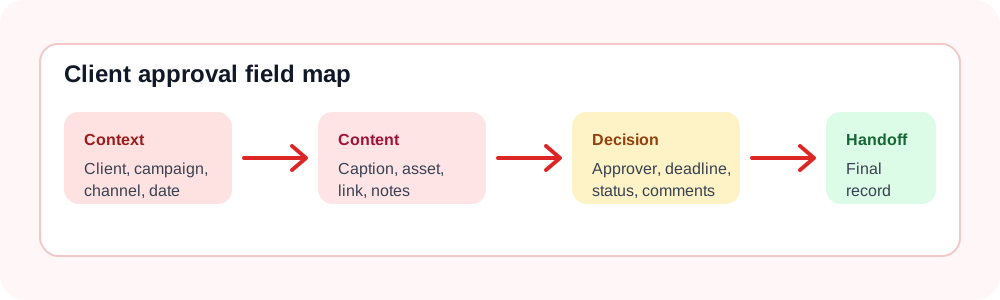
For best social media approval tools for agencies, the workflow should include the client name, content owner, channel, caption, creative link, planned date, decision deadline, review instructions, approver, current status, revision notes, approval timestamp, and publishing handoff notes. The fields can stay lightweight, but the decision record must be complete enough that agency owners and operations leads comparing approval software can understand what happened without reading a full email thread.
Step-by-step implementation workflow
To implement How to Choose Social Media Approval Tools for Agencies, start by naming the client approver and the agency owner. Prepare the post with the caption, asset, channel, date, and campaign context, then check it against this page's scenario: A small social agency with six retainers should score tools on client simplicity, revision visibility, reminder handling, and export quality before it cares about advanced publishing features. Run internal review before involving the client, send one approval request with a clear approve or request-changes action, keep requested changes connected to the new version, and lock the final version before publishing handoff.
Freelancer, agency, and marketing team examples
agency owners and operations leads comparing approval software should scale the process to review risk. A freelancer can use one client board, one approver, and one weekly review batch. A small agency needs status labels and reminders across accounts. An internal social media manager may need stakeholder review before external approval. A larger content team needs version history so the publishing specialist can confirm which best social media approval tools for agencies decision is final.
Decision framework
Use a dedicated approval workflow for best social media approval tools for agencies when more than one person reviews content, when posts move through revision rounds, when approvals are tied to deadlines, or when the publishing team needs proof of sign-off. A lighter checklist can work for occasional one-off posts. If this topic is recurring, client-facing, or multi-channel, approval status and revision history should live beside the content record.
Comparison table
For best social media approval tools for agencies, email is easy to start but weak for status tracking. Spreadsheets show rows and dates but rarely preserve review context. Project boards can work if every client adopts the process. A focused approval portal gives clients a simpler review surface and gives the agency a clearer record of comments, decisions, timestamps, and handoff readiness. Choose the lowest-friction system that still protects decision history for agency owners and operations leads comparing approval software.
Checklist before sending content for review
Before using the How to Choose Social Media Approval Tools for Agencies process, confirm the approver, post title, channel, caption, creative link, planned date, review deadline, what feedback is requested, what is already final, and what happens after approval. Check that the client can open the link, understand the post, and choose approve or request changes without extra context. If any of those items are missing, fix the request before sending it.
Common mistake to avoid
Choosing a tool because it has a busy feature list, then discovering clients still approve posts by email because the review experience feels too heavy. This mistake usually creates extra follow-up, vague feedback, or version confusion. The fix is not more admin. The fix is a clearer decision path: one owner, one review location, one current version, and one visible status that tells the team what to do next.
People Also Ask questions answered in context
What software do social media agencies use for approvals? In this workflow, the short answer is to keep the decision, feedback, and version history attached to the post instead of separating them across messages. How do social media approval tools work? In this workflow, the short answer is to keep the decision, feedback, and version history attached to the post instead of separating them across messages. What is the difference between content review and content approval? In this workflow, the short answer is to keep the decision, feedback, and version history attached to the post instead of separating them across messages. How do approval workflows improve accountability? In this workflow, the short answer is to keep the decision, feedback, and version history attached to the post instead of separating them across messages.
Internal links and next step
Compare the criteria against Red Falcon HQ, then review the pricing page when you know how many active clients and monthly approval posts you need. Useful next pages include best social media approval tools, approval workflow comparisons, client content approval software, social media approval workflow, client content approval checklist, stakeholder feedback consolidation, client approval SLA template, Red Falcon HQ pricing. These links keep the article connected to the Red Falcon HQ product pages, templates, comparisons, and Resource Centre without forcing duplicate intent.
Practical comparison table
| Method | Works best when | Risk to watch |
|---|---|---|
| Email thread | The approval is rare, simple, and has one reviewer. | Feedback and final decisions can be buried. |
| Spreadsheet | The team mainly needs a calendar and simple status tracking. | The decision record can become detached from the post. |
| Project board | Internal tasks need broad workflow management. | Clients may find the review path too complex. |
| Approval portal | The agency needs comments, decisions, timestamps, reminders, and handoff context. | The request still needs complete content and clear ownership. |
Implementation guidance by role
Freelancers
Keep the best social media approval tools for agencies process lightweight. Use one client board, one review link per post or batch, one deadline, and one handoff checklist. Avoid building an agency-scale process before the client volume requires it.
Small agencies
Standardize the approval language across accounts. Every account manager should use the same status labels, review request format, revision rules, and final handoff fields so leadership can see blockers without asking for updates.
Social media managers
Protect the creative context. The client should see the caption, channel, asset, publish date, and campaign note together so feedback is specific enough to act on and approval means the current version is ready.
Marketing teams
Separate internal review from external approval. Internal stakeholders can review strategy, compliance, and tone first; the client or final approver should receive only the version your team is ready to stand behind.
How to know the workflow is working
A healthy approval workflow is visible before a deadline is missed. Your team can see what is waiting on the agency, what is waiting on the client, what needs revision, and what is ready for publishing handoff. Clients understand the request without asking for extra context. The publishing owner can trust the approved version without reading through every comment. If those things are not true, improve the request format before adding more tools or reminders.
Review the process at the end of each content cycle. Look for vague feedback, repeated revision themes, missing assets, late approvals, and posts that were approved but still hard to hand off. Those signals show where the workflow needs a better template, clearer owner, earlier internal review, or stronger client instructions.
Purposeful image briefs
social-media-approval-tool-scorecard.png
Placement: after evaluation criteria
Alt text: Scorecard comparing approval tools by client experience, revision history, reminders, and exports
Purpose: Help buyers compare tools without relying on generic feature lists.
agency-approval-tool-decision-flow.png
Placement: near decision framework
Alt text: Decision flow for choosing a social media approval tool for an agency
Purpose: Show when a focused approval tool is a better fit than a general project board.
Recommended internal links
Put the workflow into practice
Send a no-login approval link, keep comments with the post, and export approved content for your publishing process.
Frequently asked questions
What is a content approval workflow?
A content approval workflow is the process for moving content from draft to review, changes requested, approved, and ready for publishing. It defines who reviews, what they review, how feedback is recorded, and what counts as final sign-off.
How do agencies get client approval for social media posts?
Agencies get better approval outcomes by sending complete review context, using one decision link, giving clients clear approve or request-changes actions, and recording the final status with the post.
What is the difference between content review and content approval?
Content review is the feedback stage. Content approval is the explicit decision that the current version is accepted for the next step. A healthy workflow keeps both the feedback and the decision visible.
How many revision rounds should an agency allow?
Many agencies define one or two standard rounds, then treat additional changes as a scope or timeline discussion. The exact rule should be clear before review starts.
How do you avoid missed feedback?
Keep comments attached to the specific post, assign an owner for resolution, and do not move the post to approved until requested changes are addressed or explicitly declined.
How does this apply to best social media approval tools for agencies?
For best social media approval tools for agencies, the key is to match the workflow to the reader's intent: commercial investigation: compare approval tool criteria before choosing a workflow. The process should make the next decision easier, not add ceremony.