Resource
Client Approval Communication Scripts
Reusable scripts for initial approval requests, reminders, clarification questions, revision boundaries, and final sign-off.
- Primary keyword
- client approval communication scripts
- Search intent
- Script template intent: improve client approval messages.
Direct answer
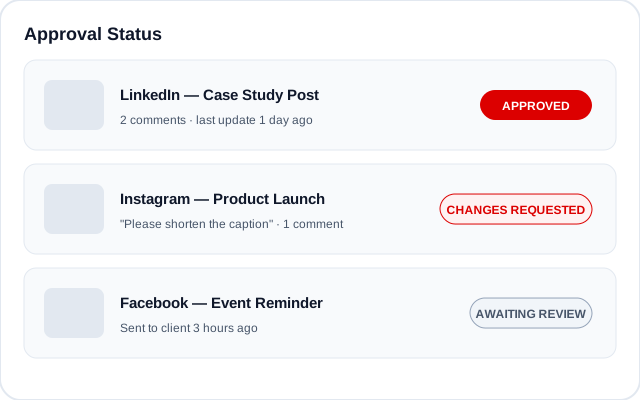
Client approval communication scripts should give teams repeatable language for approval requests, reminders, vague feedback clarification, revision boundaries, late approvals, and final handoff confirmation.
Practical framework
Define the client approval communication scripts decision: write down exactly what the reviewer is approving, whether it is the caption, creative direction, campaign detail, channel choice, publish date, or all of those items together.
Separate review from approval: review means feedback is being gathered; approval means the current version is accepted for handoff. This distinction keeps client approval communication from becoming vague commentary.
Assign one owner on each side for client approval communication scripts: the agency owner prepares and resolves the item, while the client owner gives the final decision or gathers stakeholder input before responding.
Keep evidence with the client approval communication record: comments, requested changes, timestamps, and approval status should stay attached to the post or calendar item rather than living in a separate message thread.
Prepare the next step after client approval communication scripts: every approved item should move into a publishing handoff with final copy, asset link, channel, date, approver, and internal notes.
Step-by-step workflow
Step 1
Collect the campaign or business context before working on client approval communication so the review request has a purpose.
Step 2
Draft the post, template, calendar item, or handoff pack for client approval communication scripts with all fields needed for review.
Step 3
Run a quick internal quality check on client approval communication for clarity, links, dates, platform fit, and missing assets.
Step 4
Send one client approval communication scripts review request with a specific deadline and one primary decision path.
Step 5
Capture comments and change requests against the current client approval communication version, then assign resolution to the agency owner.
Step 6
Revise only the affected client approval communication items, preserve the original feedback, and request approval again when the change is material.
Step 7
Mark the final client approval communication scripts item approved only after the current version has explicit sign-off.
Step 8
Move approved client approval communication content into the publishing handoff queue with all notes needed by the person scheduling or publishing.
Implementation checklist
- Client and campaign are named for client approval communication scripts.
- Approver and agency owner are assigned before client approval communication review starts.
- Caption, creative link, channel, and planned date are present on the client approval communication item.
- Review deadline is visible for this client approval communication scripts workflow.
- Requested decision is clear for client approval communication: approve or request changes.
- Comments are attached to the client approval communication item, not scattered across tools.
- Revision owner is assigned when client approval communication scripts changes are requested.
- Approved client approval communication version is protected from silent edits.
- Publishing handoff for client approval communication scripts includes final copy, asset, date, approver, and notes.
Client approval communication scripts
Use this client approval communication scripts resource as a reusable operating asset. It turns the related approval task from an informal conversation into a repeatable workflow with owners, fields, status, review rules, and handoff notes.
Example: account manager uses this client approval communication scripts before sending a client-facing asset for review. The team checks the current version, assigns the approver, captures comments, resolves changes, and moves only the approved version into handoff.
Reusable field table
| Field | How to use it | Owner |
|---|---|---|
| Current version | Identify the exact item being reviewed or approved. | Content owner |
| Decision owner | Name who can approve, request changes, or escalate. | Account manager |
| Review deadline | Show when the decision is needed for the workflow to stay on track. | Account manager |
| Status | Track whether the item is drafted, in review, changes requested, approved, or ready for handoff. | Workflow owner |
| Handoff note | Tell the next person which version is safe to use and what context matters. | Publishing owner |
Operating rules
- Apply this client approval communication scripts only after the item has enough context for a reviewer to make a decision.
- Keep reviewer comments attached to the item instead of scattering them across messages.
- Separate internal QA, stakeholder review, client approval, and publishing handoff when those decisions carry different risk.
- Do not mark work approved until requested changes are resolved or intentionally declined.
Handoff checklist
- The current version is visible.
- The approver is named.
- Open comments are resolved.
- Requested changes have owners.
- Approval timestamp or approval note is present.
- The final handoff includes copy, asset, date, owner, and context.
Comparison table
| Method | Best for | Limitation |
|---|---|---|
| Email thread | One-off approvals with one stakeholder and low revision risk. In this resource, apply it to client approval communication. | Decision history gets buried and version context is easy to lose. Watch this especially when managing client approval communication scripts. |
| Spreadsheet | Calendar planning, simple status tracking, and lightweight internal coordination. In this resource, apply it to client approval communication. | It rarely gives clients a clear review surface or attached comment history. Watch this especially when managing client approval communication scripts. |
| Approval portal | Recurring client work with comments, change requests, reminders, timestamps, and publishing handoff. In this resource, apply it to client approval communication. | It still needs complete draft context and a named approver to work well. Watch this especially when managing client approval communication scripts. |
Decision framework
- Use this resource when client approval communication is recurring, client-facing, or tied to publishing deadlines.
- Use a lighter checklist when client approval communication scripts is rare, low-risk, and handled by one person.
- Use a dedicated approval workflow when client approval communication needs comments, revisions, timestamps, reminders, or handoff evidence.
- Do not add client approval communication scripts process steps that clients cannot understand or that your team will not maintain.
Limitations
- A client approval communication scripts template cannot fix unclear ownership; the client approver and agency owner still need to be named.
- A no-login link reduces friction for client approval communication, but it should still rely on secure, unguessable, revocable, and expiring tokens.
- Red Falcon HQ supports approval workflow, feedback, reminders, and handoff. It does not claim direct social publishing.
- Some client approval communication feedback requires a live discussion before it can become a useful change request.
When to use this resource and when not to
Use it when
Use this Client Approval Communication Scripts resource when the work is recurring, client-facing, tied to a deadline, or likely to involve feedback from more than one person. It is especially useful when the team needs a consistent way to decide whether content is drafted, waiting for review, changes requested, approved, or ready for publishing handoff.
Do not overuse it when
Do not turn a simple one-off post into a heavy process. If one trusted person is reviewing one low-risk item and there is no revision history to preserve, a concise checklist may be enough. Add workflow structure when it prevents confusion, protects the final version, or saves follow-up work.
Realistic examples
Freelancer example: a solo social media manager uses this client approval communication scripts process to batch five posts, send one review link per post, and keep the approved versions ready for manual publishing.
Agency example: an account manager uses client approval communication rules to see which clients are blocking the calendar, which posts need revision, and which posts are ready for handoff.
Marketing team example: the internal team reviews tone and compliance first, then sends only the client-ready version to the final external approver.
Implementation guidance by team type
Freelancers
Keep client approval communication scripts lightweight. Use one owner, one approval link, one deadline, and one handoff checklist. The process should protect your time without making a small client feel like they have joined a large agency system.
Small agencies
Standardize the client approval communication scripts fields across every account: owner, approver, deadline, channel, status, feedback, revision note, and final handoff. A shared format lets any account manager understand what is blocked without asking for a separate update.
Social media teams
Separate creative review from final approval for Client Approval Communication Scripts. Internal reviewers can check tone, brand fit, and platform context first; the client or final approver should receive the version the team is ready to publish after approval.
Growing teams
Add reminders, status reporting, and handoff rules for client approval communication scripts only after the core workflow is consistent. Automation works best when the manual process already has clear decisions, owners, and version control.
Quality control before approval
Before client approval communication scripts moves to a client or final approver, check whether the request can be understood without a separate explanation. The reviewer should know what they are looking at, what decision is needed, what deadline applies, and what happens after they approve or request changes. If any of those answers are missing, the workflow will create extra messages instead of reducing them.
Confirm the current client approval communication scripts version is the only version being reviewed.
Verify that every client approval communication scripts link, asset, caption, and publish date is present.
Make the requested Client Approval Communication Scripts decision explicit: approve, request changes, or ask a clarifying question.
Record who owns the next client approval communication scripts action before the item leaves review.
Keep rejected or revised client approval communication scripts items visible until the change is resolved.
Move only explicitly approved Client Approval Communication Scripts items into publishing handoff.
Recommended field set
A useful Client Approval Communication Scripts resource should translate into fields a team can actually use. For this approval workflow, the minimum field set is client, campaign, platform, planned date, copy, creative asset, internal owner, client approver, review deadline, status, feedback, revision note, approval timestamp, and handoff note. Teams can add fields for campaign objective, audience, compliance review, or paid promotion only when those details affect the approval decision.
The client approval communication scripts field set should stay stable across clients. Stable fields reduce training time, make reporting easier, and prevent account managers from inventing a new process for every retainer. When the same status and handoff language appears across the team, leadership can identify bottlenecks, clients can review faster, and publishers can trust the final version.
Common mistakes
- Sending incomplete client approval communication content for review.
- Asking for general thoughts about client approval communication scripts instead of a decision.
- Letting several client approval communication versions circulate at once.
- Treating verbal client approval communication scripts feedback as final approval without documenting it.
- Editing approved client approval communication content without reopening review.
- Skipping client approval communication scripts handoff details after approval.
People Also Ask answers in context
What is a content approval workflow?
It is a practical operating path from draft to review, changes requested, approval, and handoff. The workflow matters because it tells the team what decision is needed and what version is current.
How do agencies get client approval for social media posts?
Agencies get cleaner approvals by sending complete context, using one review link, asking for an explicit approve or request-changes decision, and recording the result with the content item.
How do you track approved and rejected content?
Track each item with a visible status, approver, timestamp, requested changes, current version, and handoff note. The status should tell the next person exactly what to do.
How do you avoid missed feedback?
Keep feedback attached to the post, assign a resolution owner, and review open comments before any item moves to approved or ready to publish.
Suggested visuals
client-approval-communication-scripts-workflow-diagram.png
Placement: after the direct answer
Alt text: Client Approval Communication Scripts workflow showing draft, review, requested changes, approval, and handoff
Purpose: Show the process visually before readers reach the detailed checklist.
client-approval-communication-scripts-checklist.png
Placement: beside the checklist section
Alt text: Client Approval Communication Scripts checklist with owner, deadline, status, feedback, and handoff fields
Purpose: Give teams a scannable implementation reference.
Frequently asked questions
What is the main purpose of client approval communication scripts?
Client approval communication scripts should give teams repeatable language for approval requests, reminders, vague feedback clarification, revision boundaries, late approvals, and final handoff confirmation.
What is a content approval workflow?
For client approval communication, it is the process for moving content from draft to review, changes requested, approved, and ready for publishing while preserving ownership, feedback, and decision history.
What should be included in a content approval process?
For client approval communication scripts, include owner, approver, channel, caption, creative link, planned date, review deadline, feedback instructions, status, revision notes, and final handoff details.
How do you avoid missed feedback?
Keep client approval communication feedback attached to the specific post, assign a resolution owner, and do not mark the item approved until each requested change has been addressed or intentionally declined.
When should a team use a no-login approval link?
Use one for client approval communication scripts when clients need to review quickly without managing another account. The link should be unique, protected, revocable, and tied to the specific content item.
How do teams document client decisions?
Record the client approval communication approver, decision, timestamp, current version, and any approval note with the content record so the publishing team can trust the final version.
Recommended internal links
Authority references
Put the client approval communication scripts into a working approval board
Red Falcon HQ helps teams turn templates, checklists, matrices, policies, and dashboards into live review links, comments, approval status, reminders, and handoff records.